Description
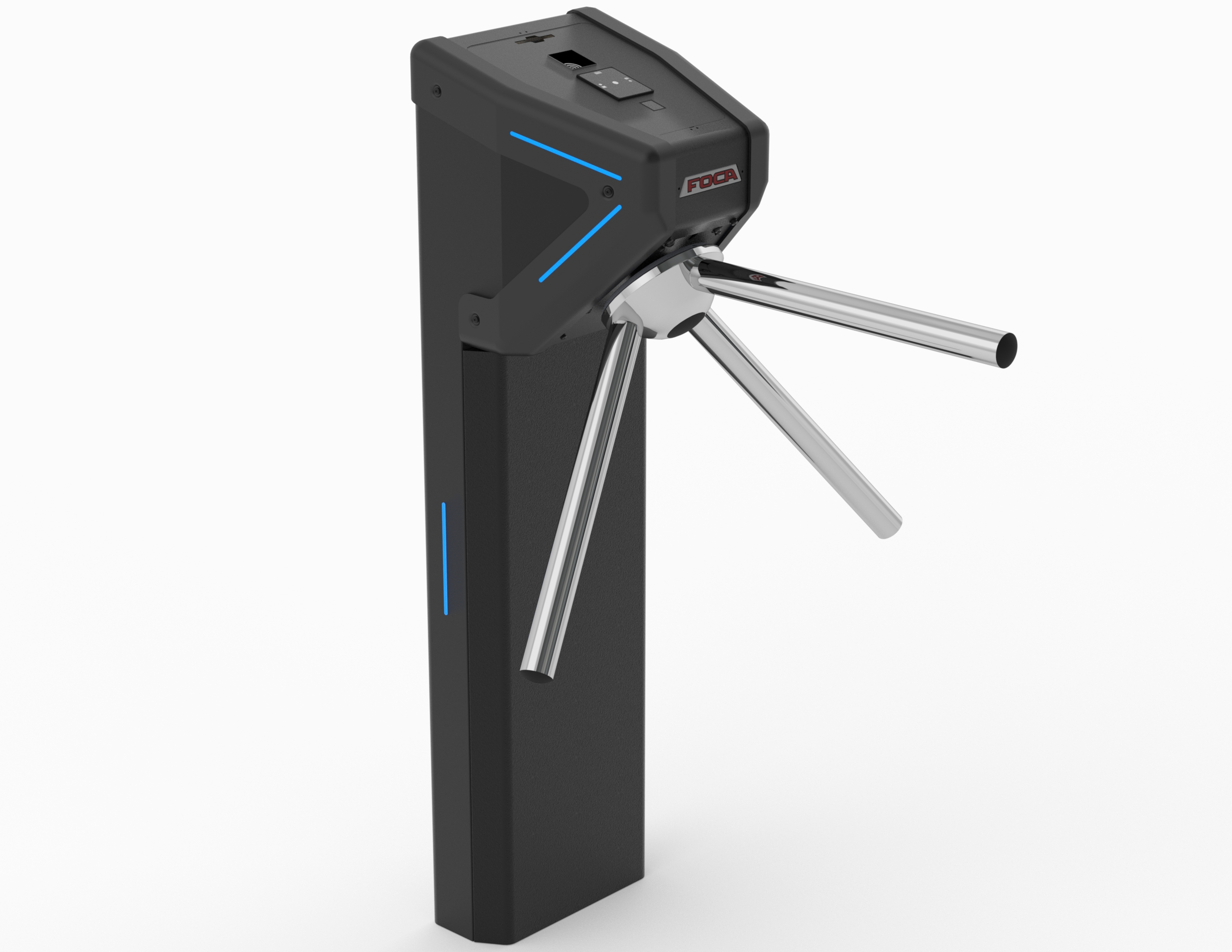
Structure composed of carbon steel tubing;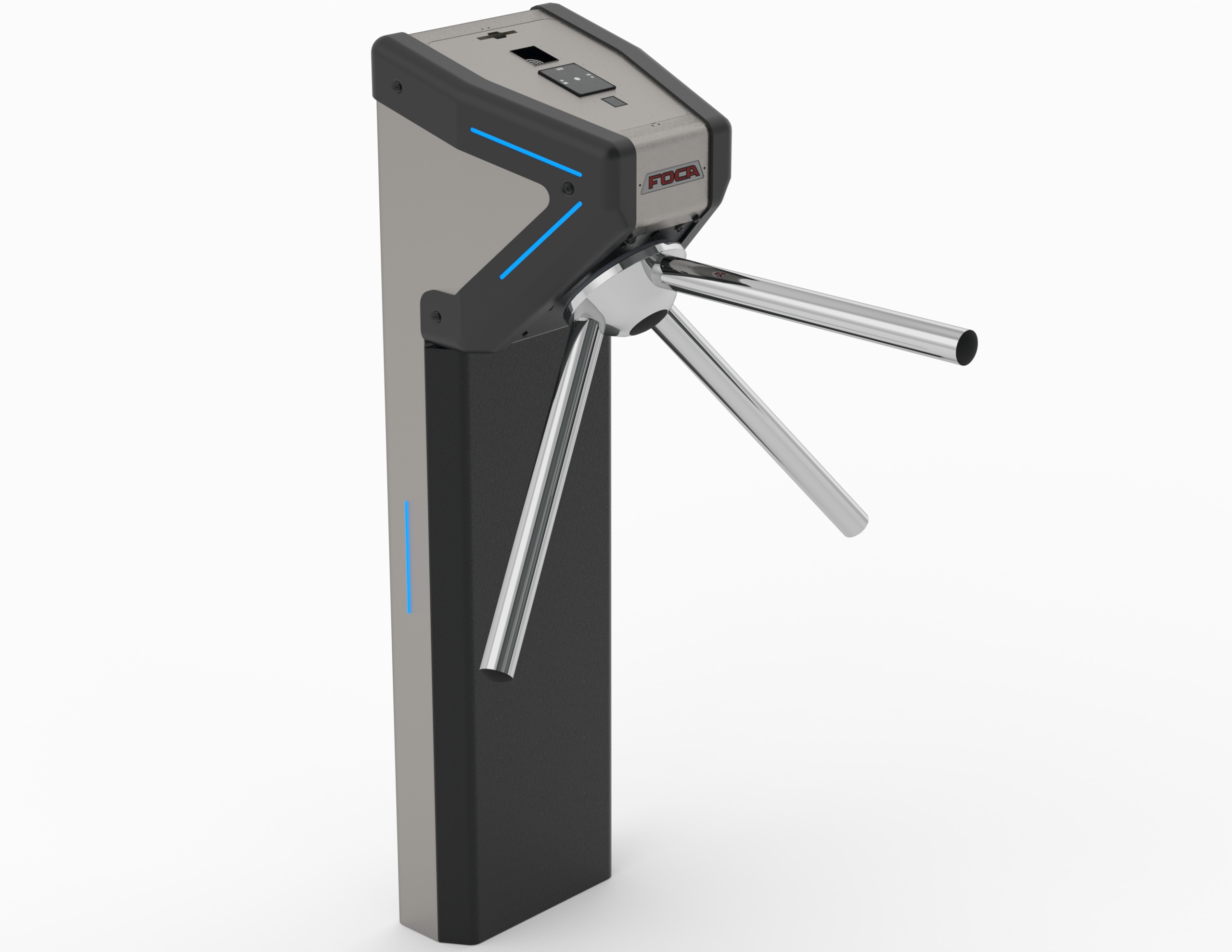
Coating: black electrostatic powder coating, or AISI 304 stainless steel;
Rotary mechanism with heat-treated steel central shaft, resistant to traction and torsion;
Spring, ball, and cam system that ensures constant stopping and bearings that provide smooth and silent rotation;
Anti-return system for heavy torques up to 2000N;
Arm rotation monitoring via optical sensor;
Electromechanical drive;
Internal components with anti-corrosion treatment;
IP (Ingress Protection) rating: 42;
Operating temperature: -10°C ~ 55°C.
Supply Voltage: 110/220 VAC, 50/60 Hz;
Operating Voltage: 12V
Maximum power: 30W;
Net weight: 40 kg;
MCBF (Mean Cycle Between Failures): 2,500,000;
MTTR (Mean Time to Repair): 15 minutes;
People flow: 20 to 25 per minute (may vary depending on the validation system).
Features
The equipment operates with individual signals for each direction of passage (entry or exit). The passage remains blocked until the control system sends a release signal.
Once passage has been made, the arms are blocked again, awaiting a new release signal. If the user does not start passage within a predetermined period of time (time-out), the passage rotation is blocked again.
For each access made (entry or exit), the electronic interface of the lock sends an individual end-of-rotation signal.
During the user's passage, the mechanical system prevents the arms from moving in the opposite direction to the authorized passage, in addition to ensuring a return to the locking position after the user has passed.
The locking solenoids are only energized during unauthorized passage attempts, avoiding unnecessary energy consumption.
In the event of a power failure, passage will remain enabled in both directions.