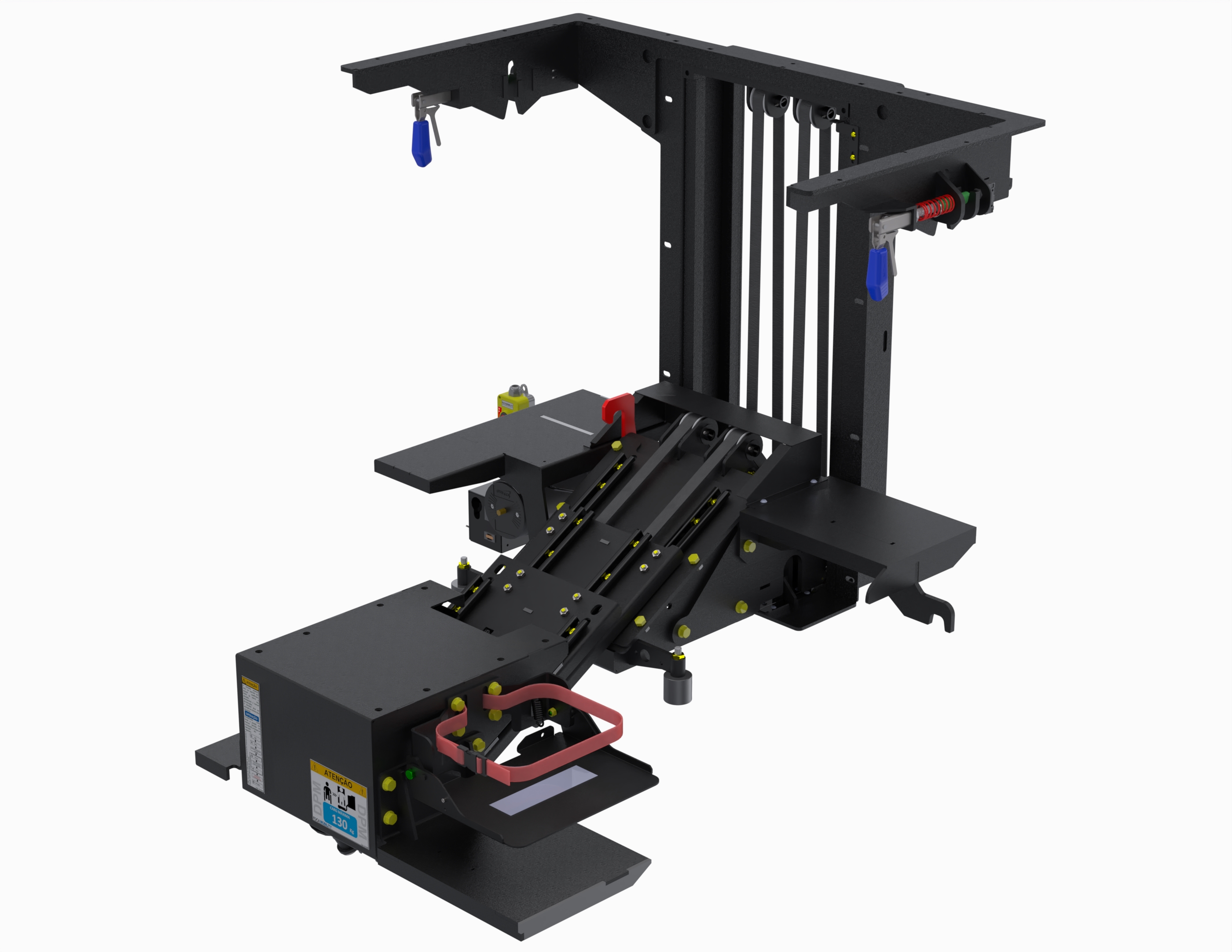
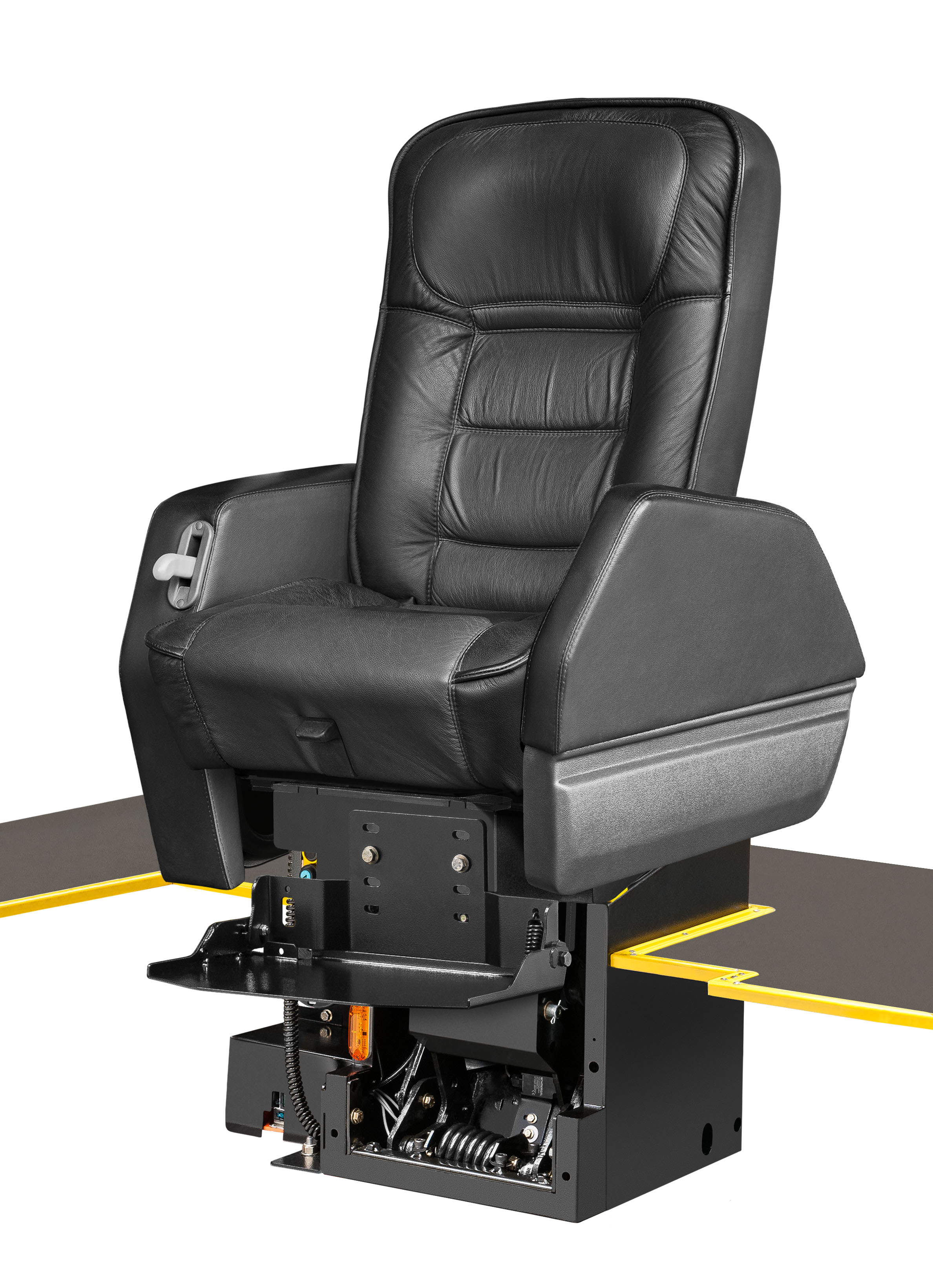
Description
 General function: lifting by hydraulic actuator and lowering by controlled gravity action;
Actuation: electro-hydraulic;
Operation: electric motor with manual emergency actuation;
System: automatic or semi-automatic;
Control: easy-to-operate push buttons;
Wheel locks: mechanical drive;
Electrical system: 24VDC or 12VDC (optional);
Maximum consumption: 55A (24VDC) or 95A (12VDC);
Working temperature: -10°C to 60°C;
Approximate weight: 210 kg;
Lifting capacity: 250 kg;
Coating: Electrostatic textured powder paint with e-coat;
Emergency system: integrated manual pump.
Features
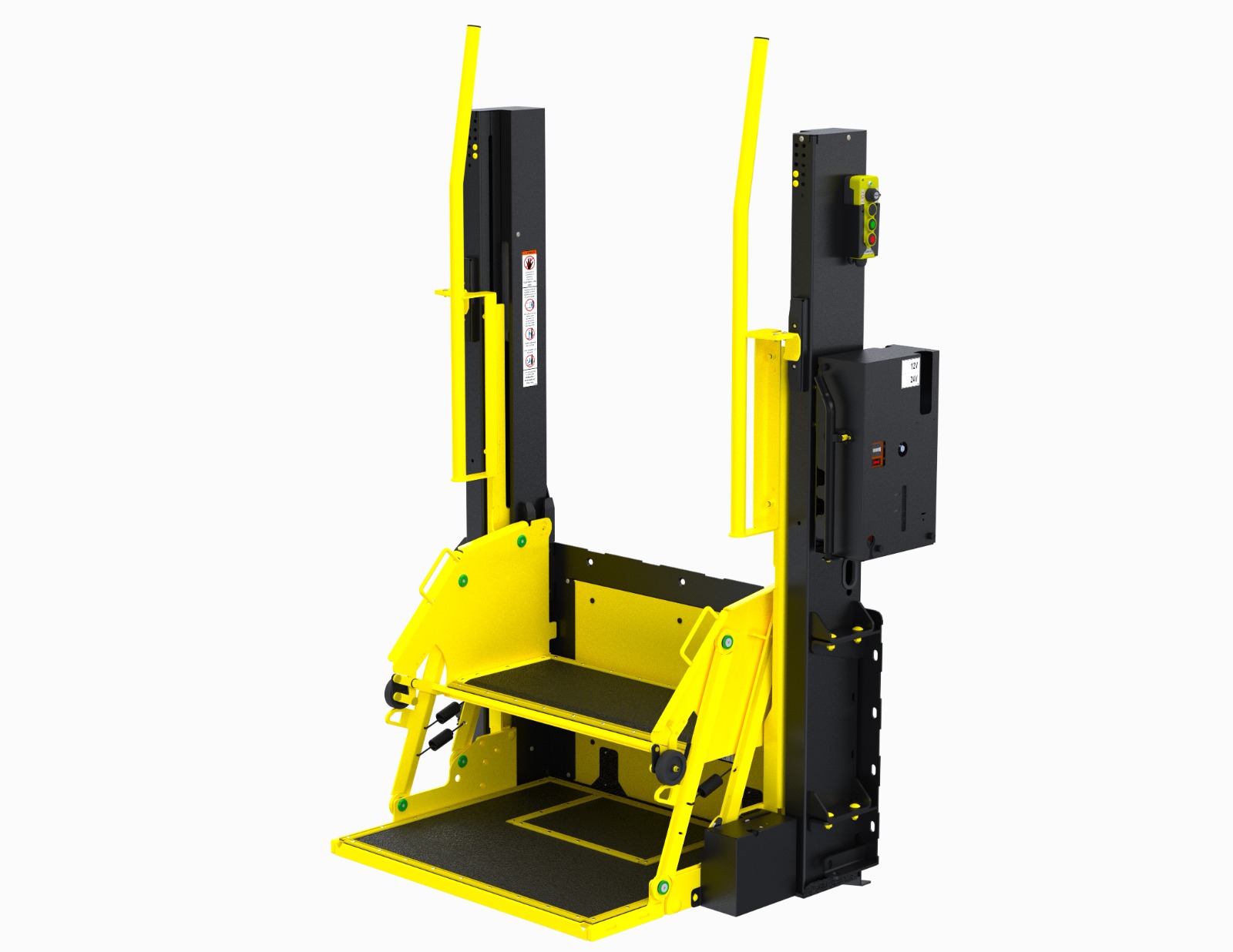
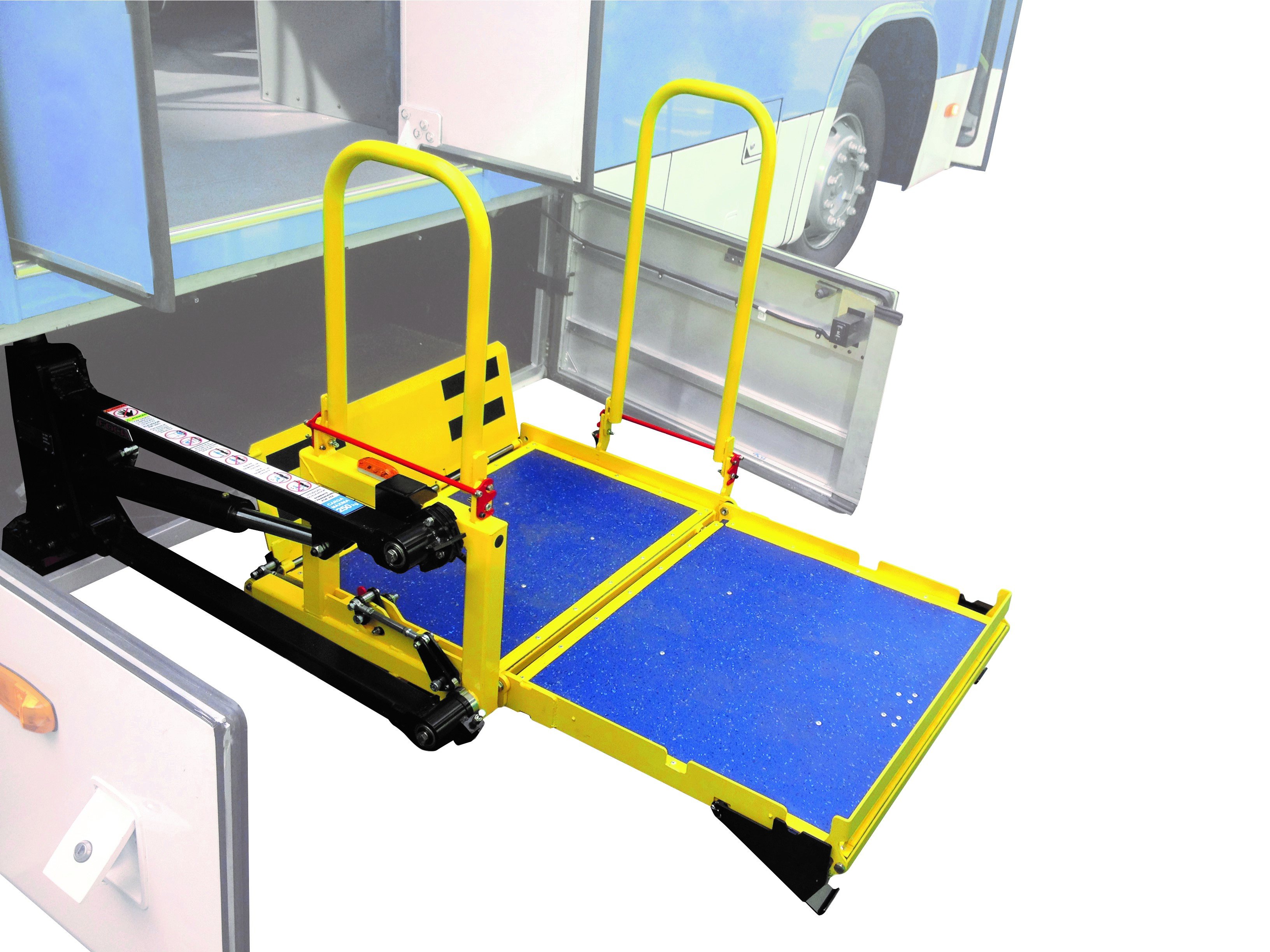
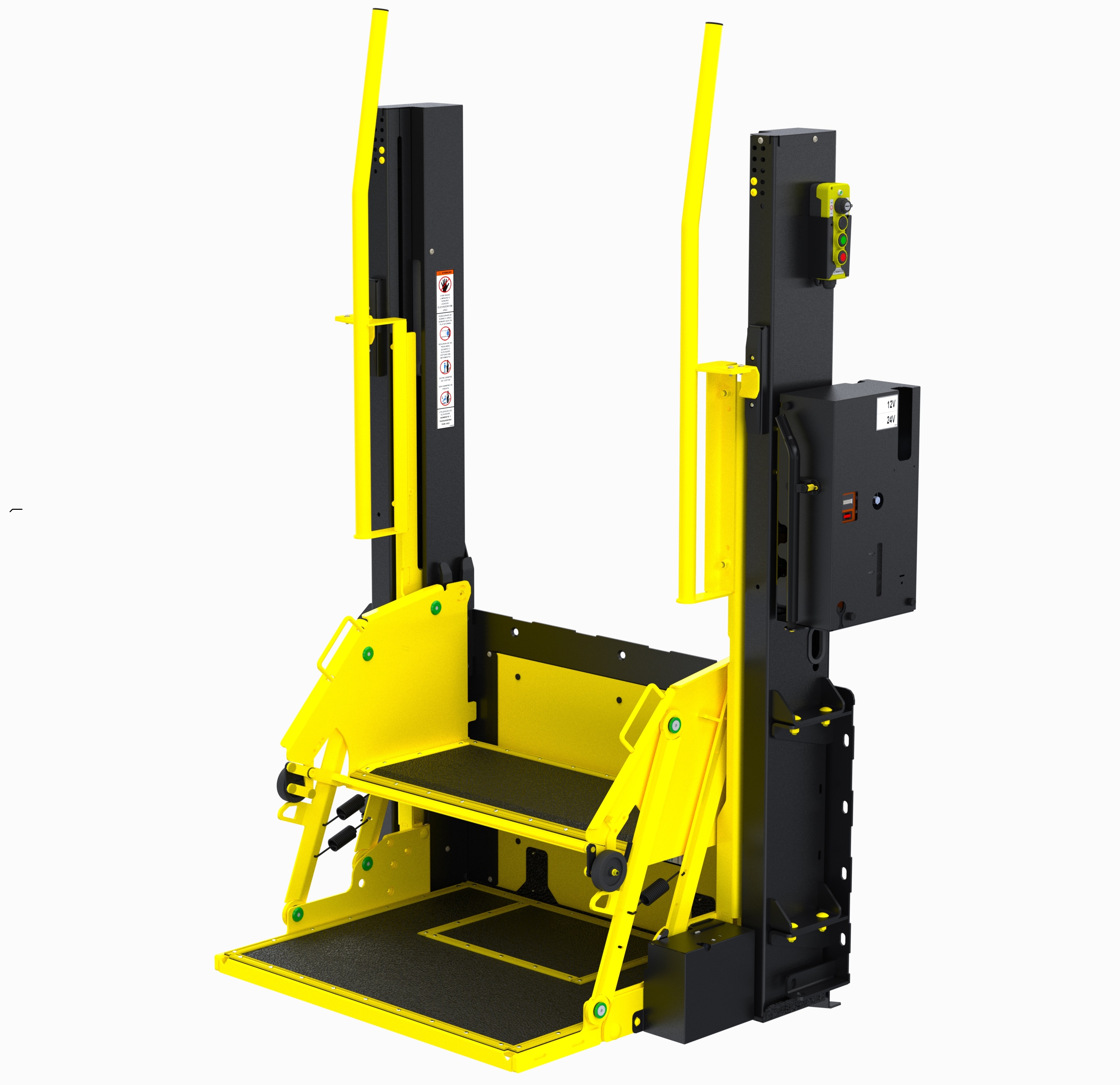
The vehicle platform operates on the principle of linear actuators driven by hydraulic fluid. The downward movement is achieved by the return of this fluid to the reservoir located in the hydraulic unit, caused by the action of gravity on the platform. The oil flow is generated by the hydraulic pump and directed to the actuators through directional valves located in the hydraulic unit itself.
The valves, in turn, are controlled by electrical signals from the control panel operated by the operator.
The platform is capable of loading and unloading only one user per operating cycle. If the user is a wheelchair user, they must position themselves with the wheelchair facing out of the vehicle. Users with reduced mobility must position themselves in the center of the platform and hold on to the equipment's handrails while the platform is in motion.
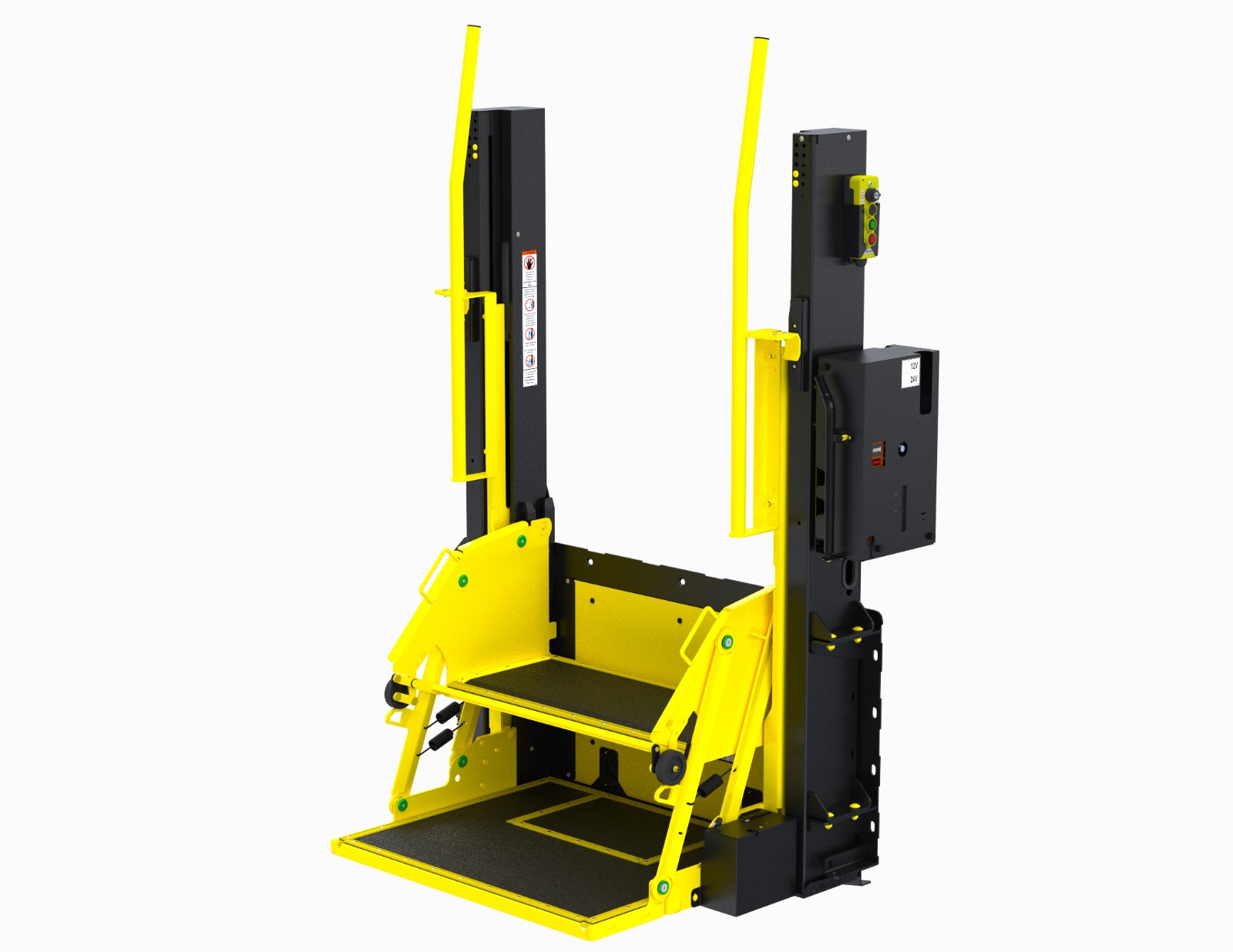
The control panel must be removed from the support located on the right side of the lift. To enable the control functions, use the elevator key, which must be kept with the professionals responsible for the operation. When the key is turned, the LED indicating that the elevator is in use will light up.
When operations are complete, and with the elevator in its transport position (staircase), the key must be slid and removed.